


The island of Kefalonia boasts enchanting places rich in history, crystal-clear seas, and unique beaches, but what I'm about to tell you about is truly incredible.
Kefalonia is a very special place because unusual natural phenomena occur, or have occurred in the past.
1. The first phenomenon is called the “Phenomenon of Katavothres”, still visible today.
This is a very rare geological phenomenon that occurs in a particular area located approximately 2.5 km from Argostoli, the island's capital, in the immediate vicinity of the lighthouse.
Here, the sea that laps this small stretch of coast seeps into the rocks, forming natural pools, before disappearing completely underground.
Already in ancient times, the first to notice this phenomenon were the inhabitants of Kefalonia themselves.
Later, scientists and scholars attempted to provide a scientific explanation for this strange occurrence.
In particular, the Greek geologist Miliaresis studied at length the effect that earthquakes would have on the Katavothres, without reaching any real conclusions, since neither the earthquake of 1867 nor the devastating one of 1953, which razed the island of Kefalonia, brought about any change in the geological phenomenon.
Even in the years that followed, various theories were formulated that attempted to explain where the seawater ended up once swallowed up by the Katavothres.
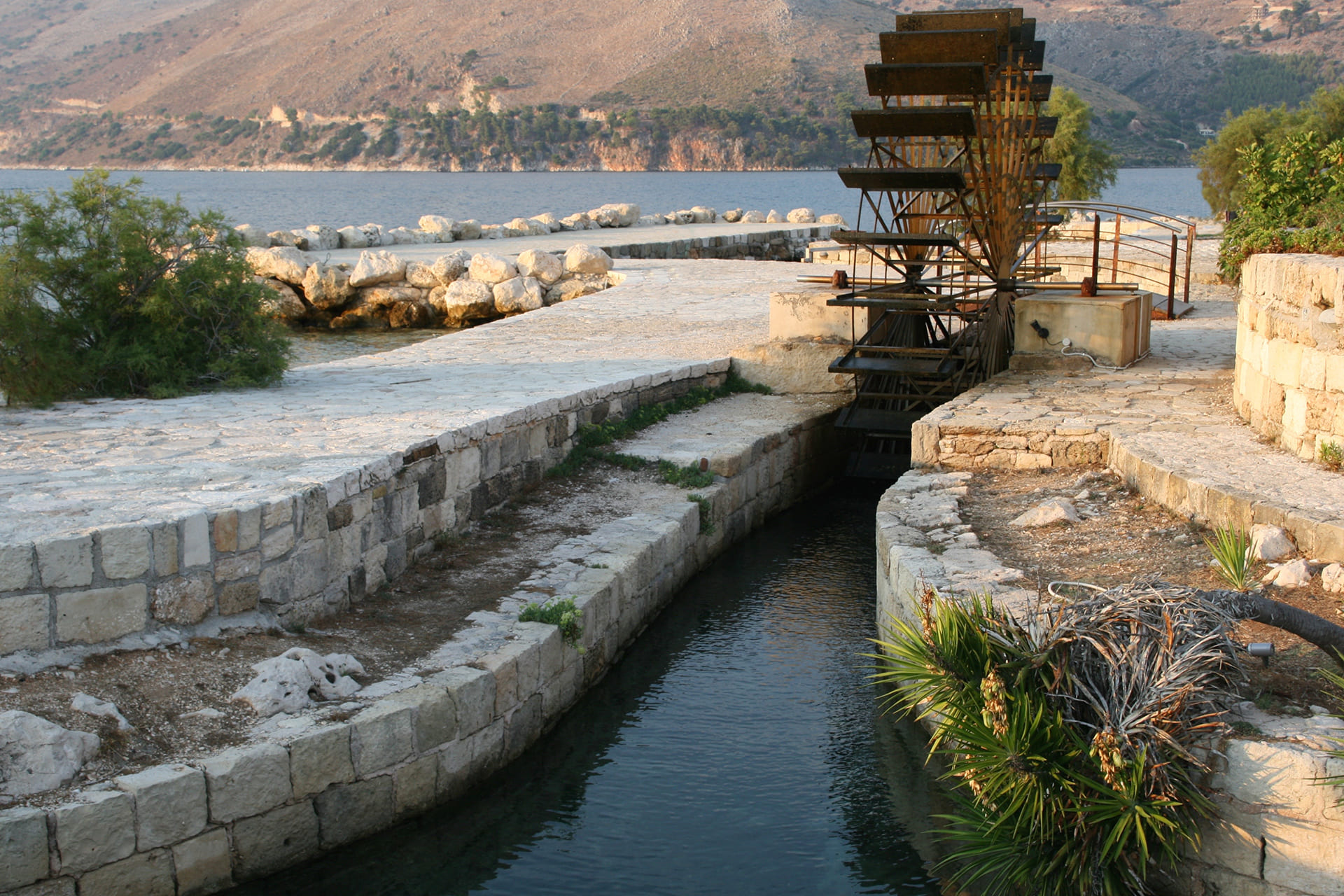

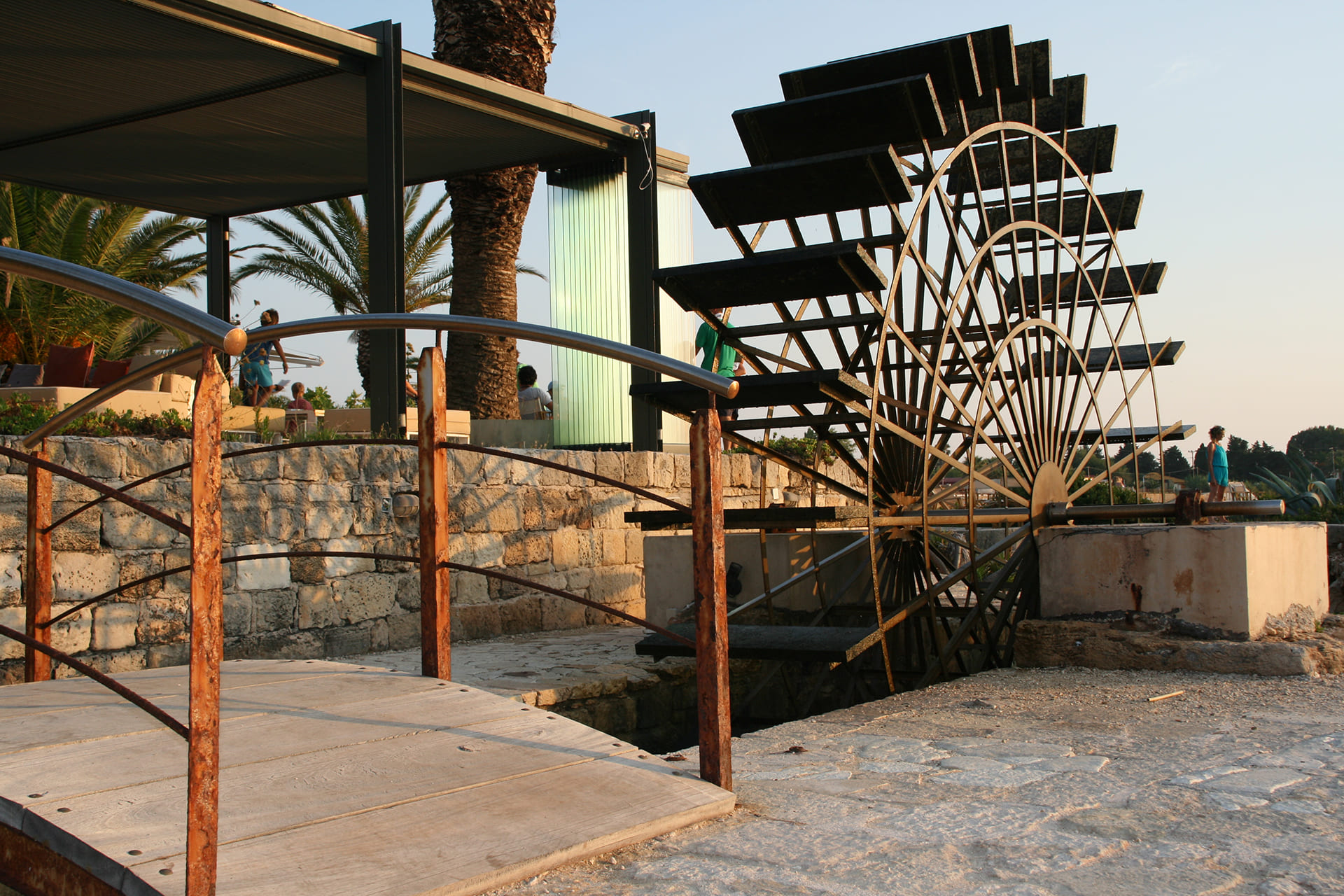
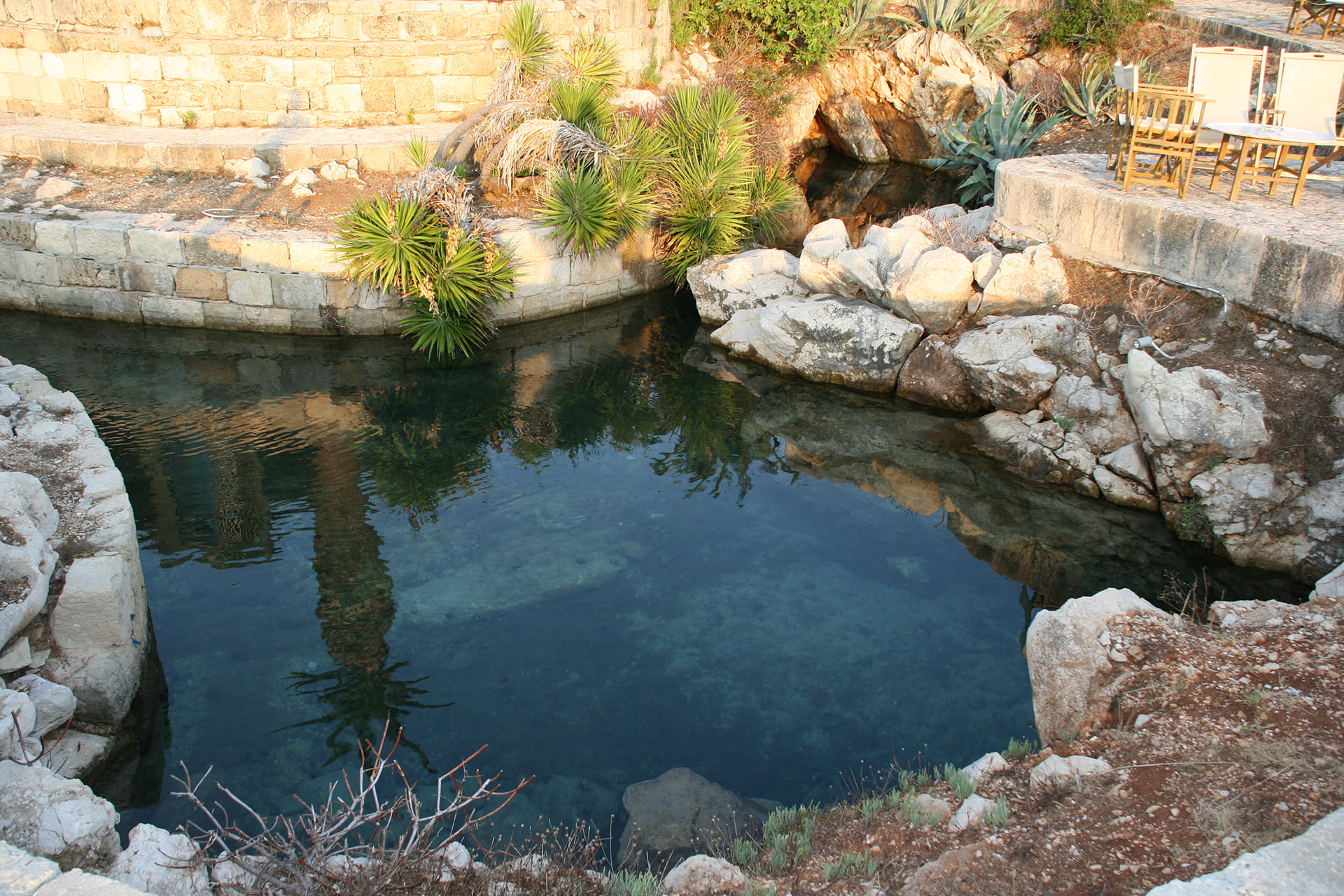


Only in 1963 did a definitive answer come about thanks to a team of Austrian geologists who did nothing more than pour a coloring substance into the water before it disappeared into the Katavothres and only later discovered that the colored water reappeared after about 14 days in the stretch of sea in front of the village of Karavomilos.
It was discovered that the water flows along an underground path, crossing the island for about 15 km in a northeasterly direction and mixing with the fresh water present in the underground aquifer, first reaches Lake Melissani (near Sami) and then Lake Karavomilos, before flowing out again into the sea.
In the Katavothres formation area in Argostoli, there is a watermill, a reconstruction of the one built in the past by the Englishman Stevens and destroyed during the 1953 earthquake, where it is possible to appreciate the flow of the sea pushing the blades of the mill and disappearing into the depths.
2. The second phenomenon, already known to the inhabitants of Kefalonia since before 1900, is unique and incredible: it is the “Kounopetra”.
Also known as the “moving stone”, it is located near the peninsula west of Kefalonia and more precisely in front of the beaches of Xi and Megas Lakos.
It is a gigantic flat monolithic rock, with a circumference of about 20 metres, which just emerges from the sea and which has never remained still in the same place and in the same position, but moves incessantly from east to west.
According to witnesses, the rock's movement is visible from the coast, but even standing on it, its vibrations can be felt; in fact, it seems that the Kounopetra moves at a frequency of 20 times a minute.
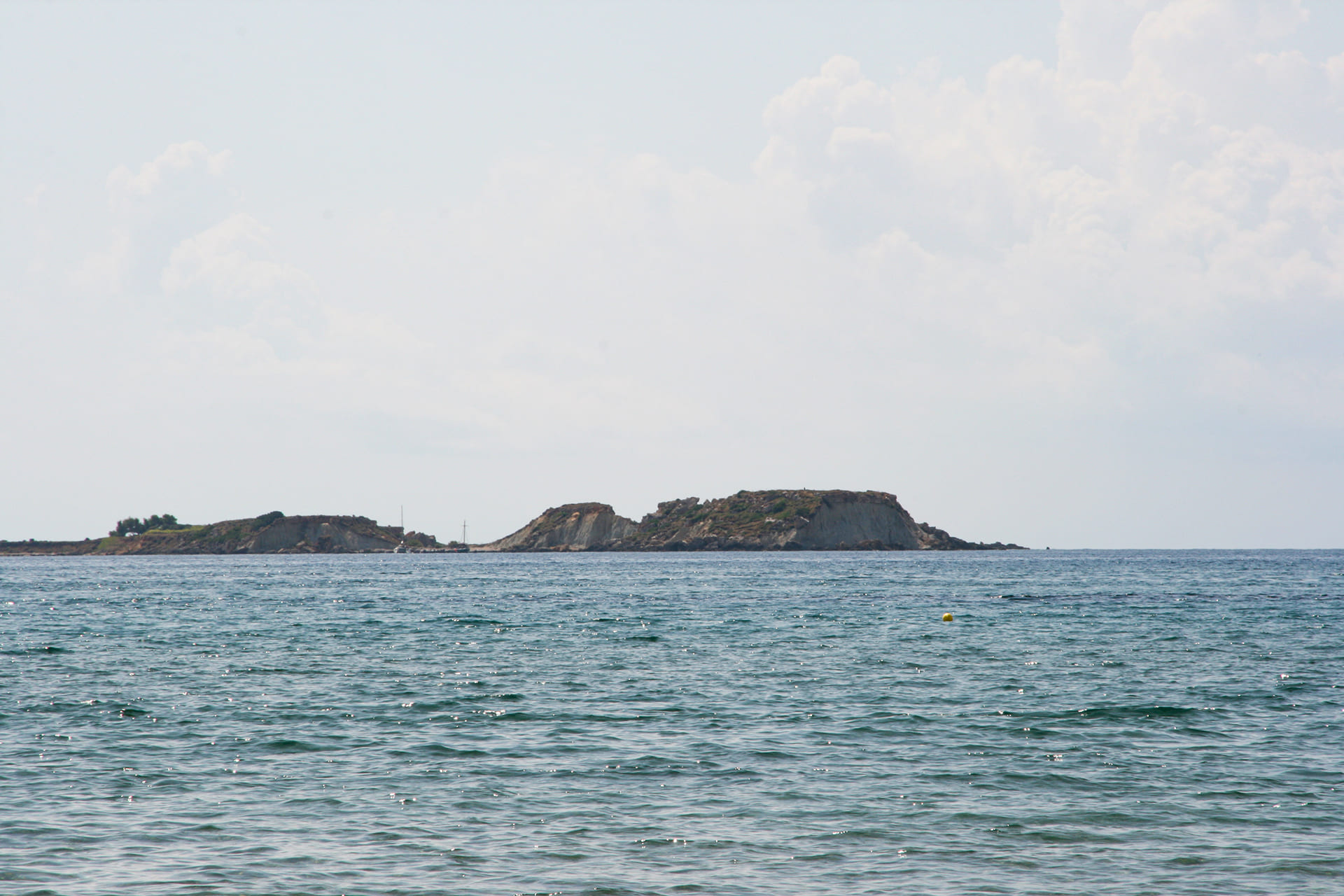
In the past, this rock was the subject of a rather comical attempt by the British navy to drag it away from the coast, but it did not achieve the desired result.
In 1953, during the terrible earthquake, a shift occurred at the base of Kounopetra that caused the rock to slide, making it stable.
From our recent visit, in fact, no obvious shifting of the rock was visible.
What we did admire, however, was the truly unique sunset view!