

Melissani Lake and the Drogarati Caves are two places you absolutely must not miss, because Kefalonia doesn't stop at the magic of its beaches and crystal-clear sea, it offers enchanting natural wonders you might not expect.
1. Lake Melissani
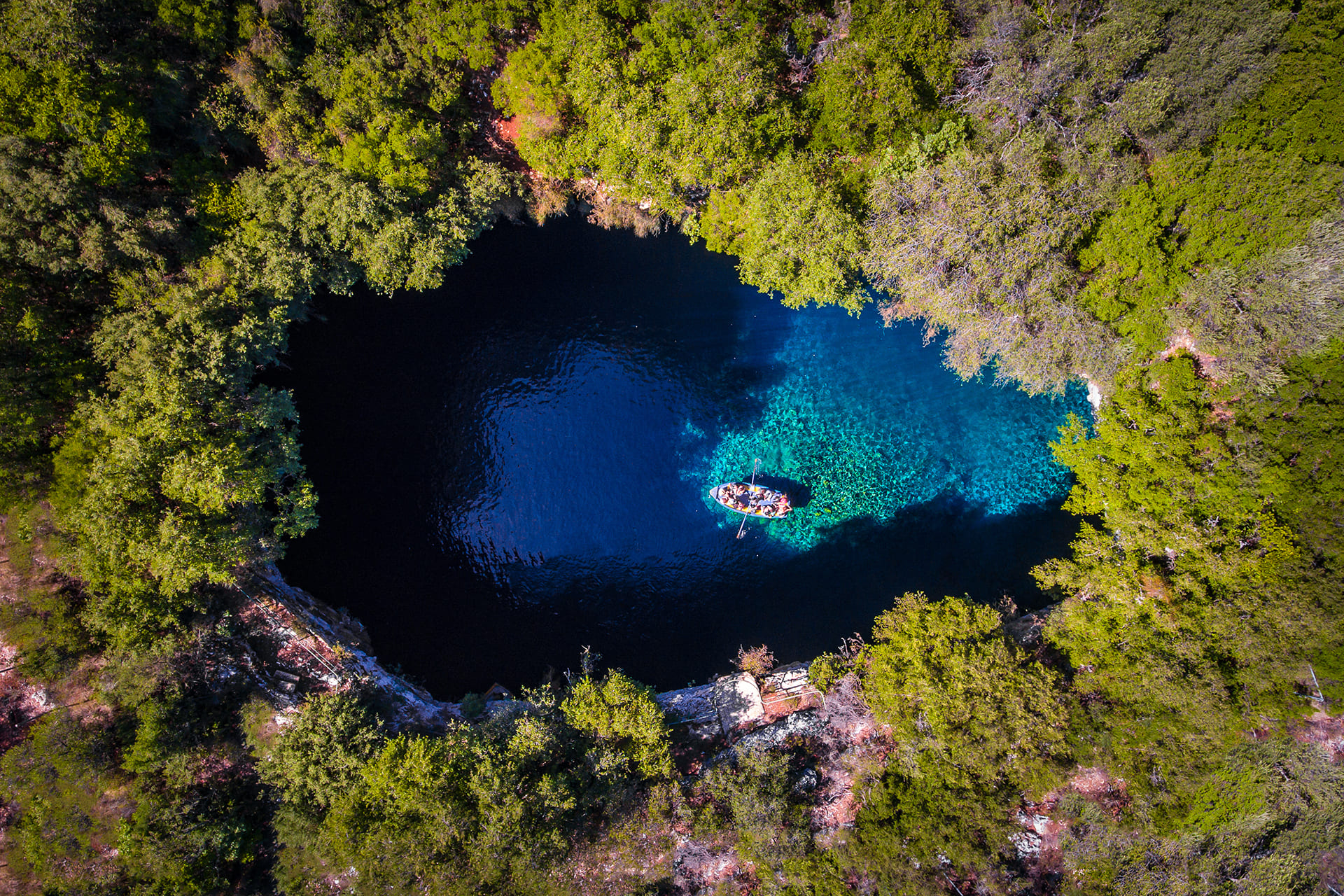
Discovered in 1951, it consists of a cave that houses an underground lake and represents a true natural wonder.
Located centrally on the island, just a couple of km from the village of Sami and about 10 km from Argostoli, it is also known as the “cave of the nymphs”, and is a particularly fascinating and mysterious place.
Lake Melissani is made up partly of salt water from the sea and partly of fresh water from a natural spring located approximately 20 meters deep. This means that the lake, despite not being very large, still reaches a considerable depth.
The true beauty of this lake is linked to what happened during the 1953 earthquake.
During the quake, the vault of the cave collapsed, allowing the sun's rays to illuminate the lake inside and, above all, create incredible plays of light and transparency.
Through a simple boat ride, for a fee, it is possible to visit the two rooms into which the cave is divided:
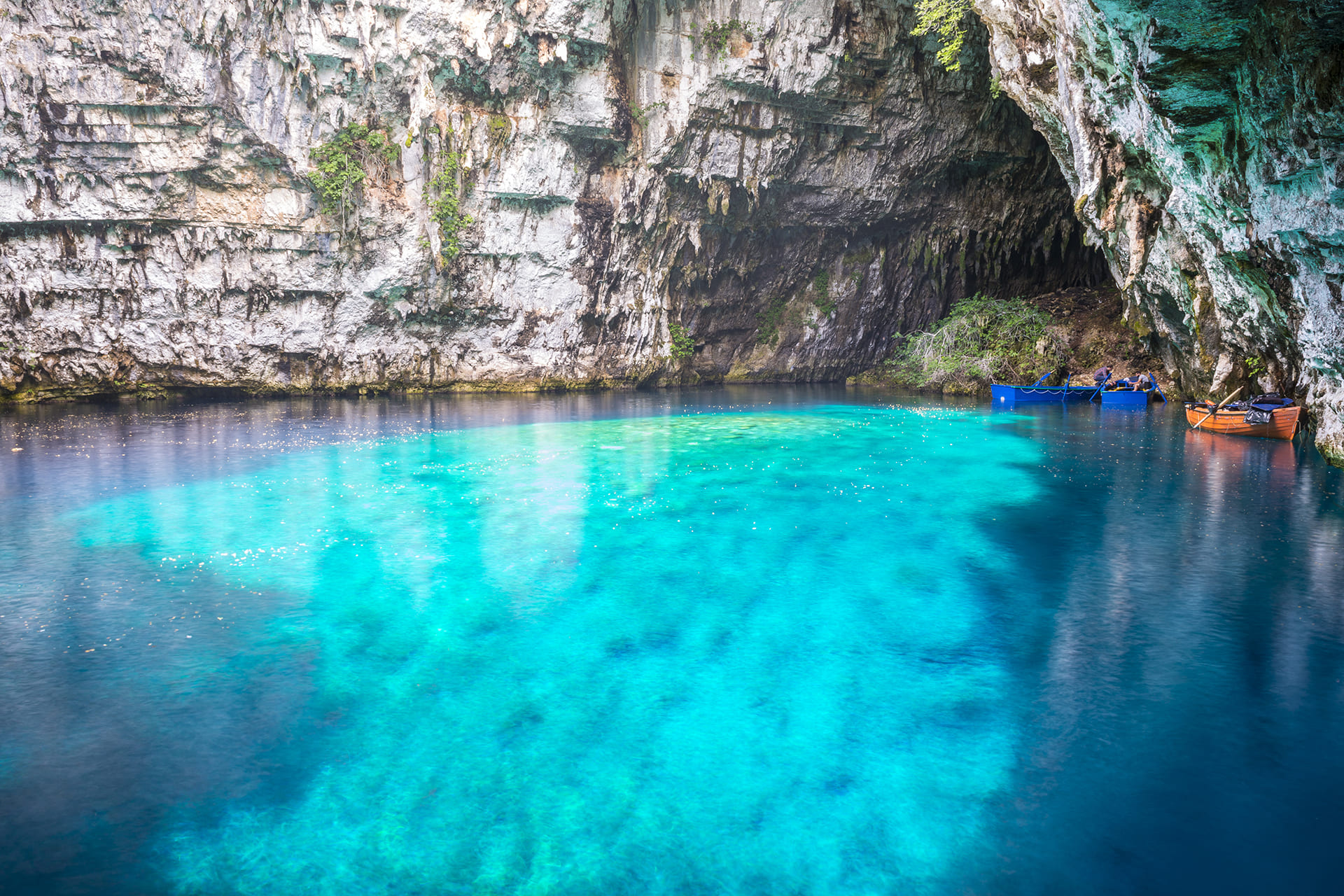
1. The first, entirely illuminated by the sun's rays, incredibly enhances the transparency and colours of the lake water, which fade from a very light blue to an intense, deep blue.
2. The second, located next to a small islet, is rich in natural concretions consisting of stalagmites and stalactites.
We suggest, if possible, to go there between 12.00 and 14.00, during this time frame, as the sun's rays are stronger, the reflections and plays of light on the water as well as on the walls of the cave will be even more spectacular.


2. The Drogarati Caves
A short distance from Lake Melissani is the Drogarati Cave.
Discovered by the inhabitants of Kefalonia in the last century, it was equipped for tourist visits and then opened to the public only in 1963.
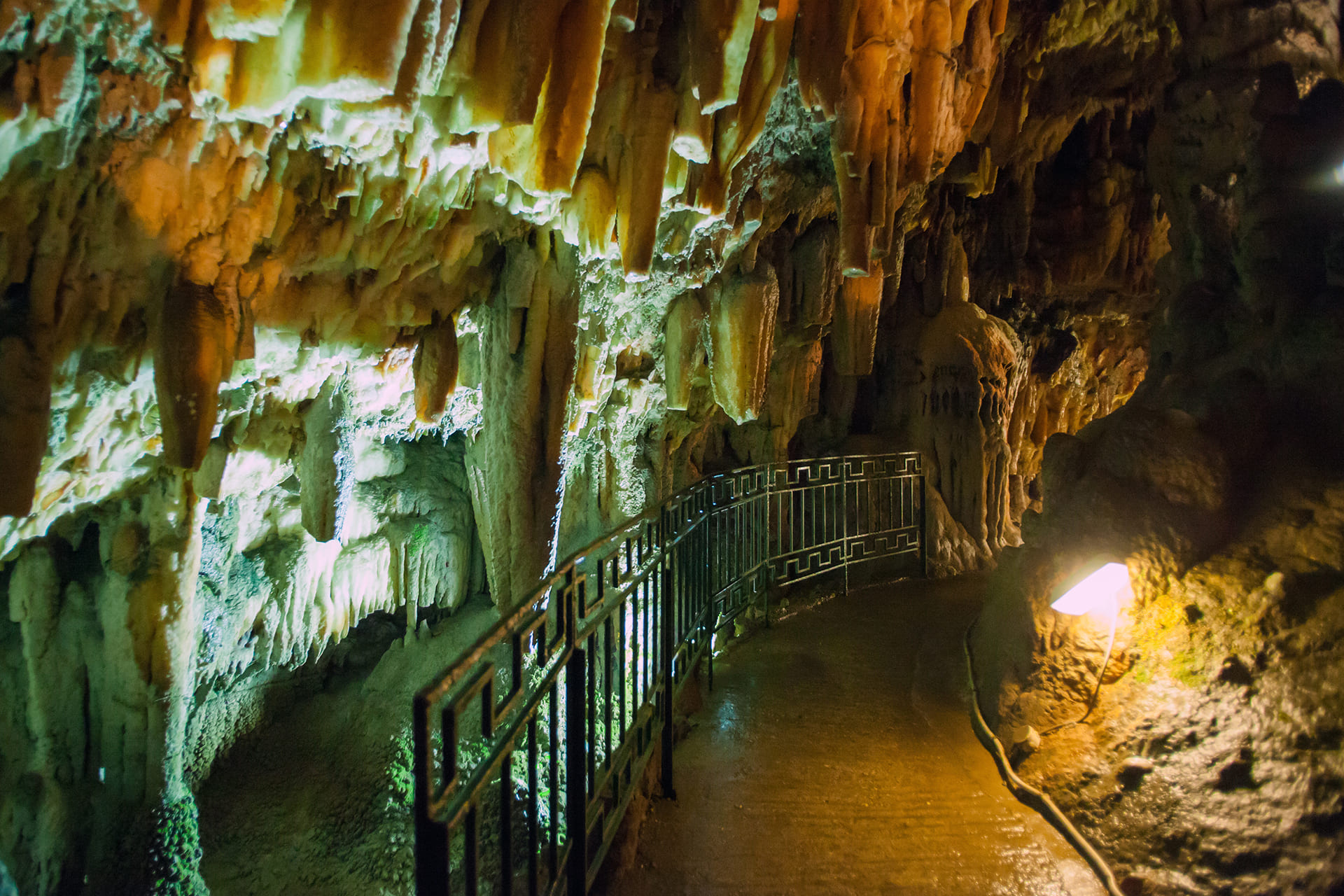
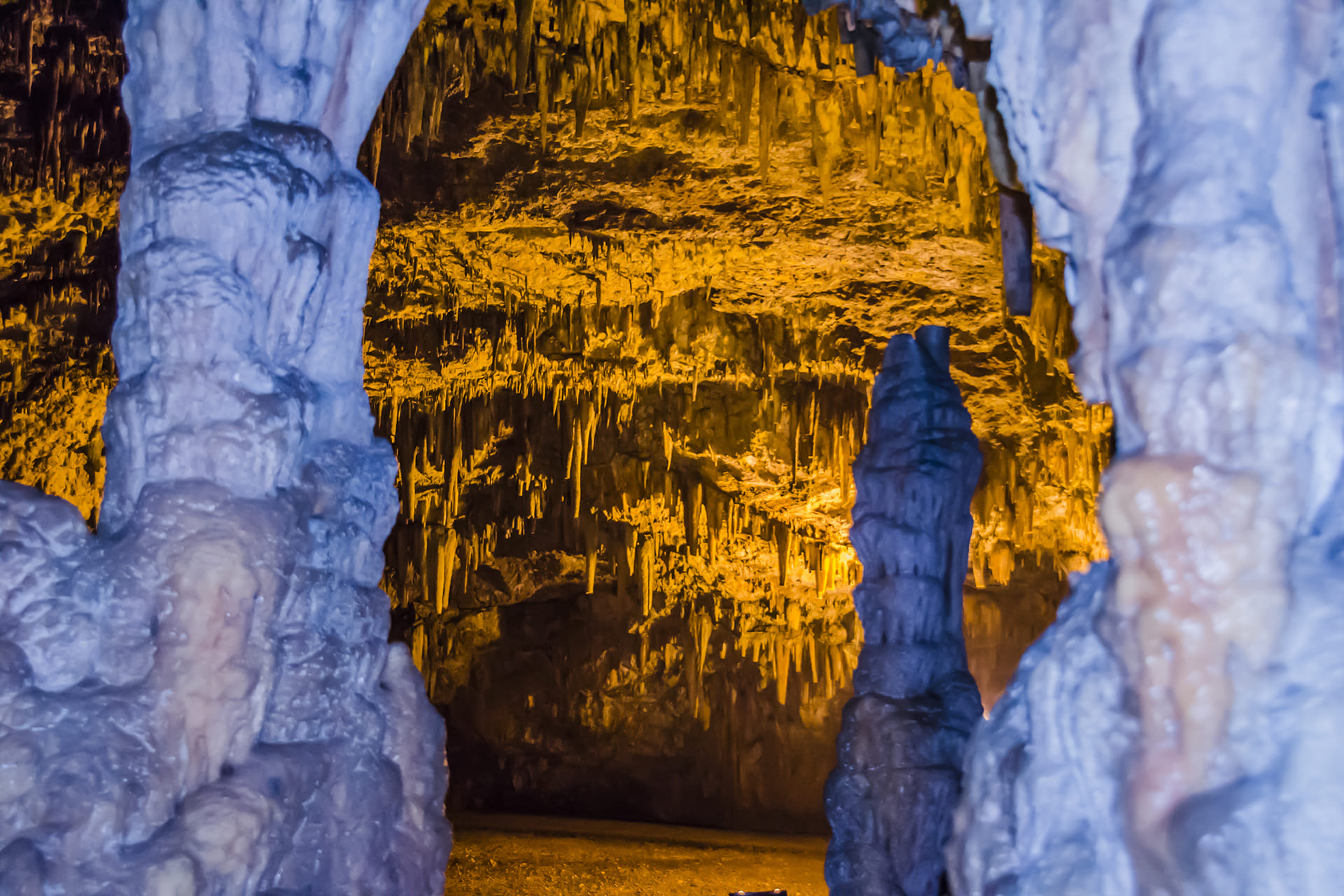
The caves are located about a hundred meters deep and have two rooms, both splendid, divided by enormous blocks of rock.
1. The highest room, called the “royal balcony”, is characterised by translucent stalactites.
2. The lowest room , called the “ Apotheosis Room ” , has a semicircular shape, is very large and the vaulted ceiling, about 20 metres high, is dotted with numerous natural concretions.
Given its unique shape, the cave offers fantastic natural acoustics, so much so that on special occasions it is used for high-level musical performances.
Precisely for this reason, it is also known as the "Concert Cave."


Melissani Lake and Drogarati Cave are part of Kefalonia's magnificent natural heritage, and given their location, a visit to them can be combined with a trip to the island's northernmost beaches.